
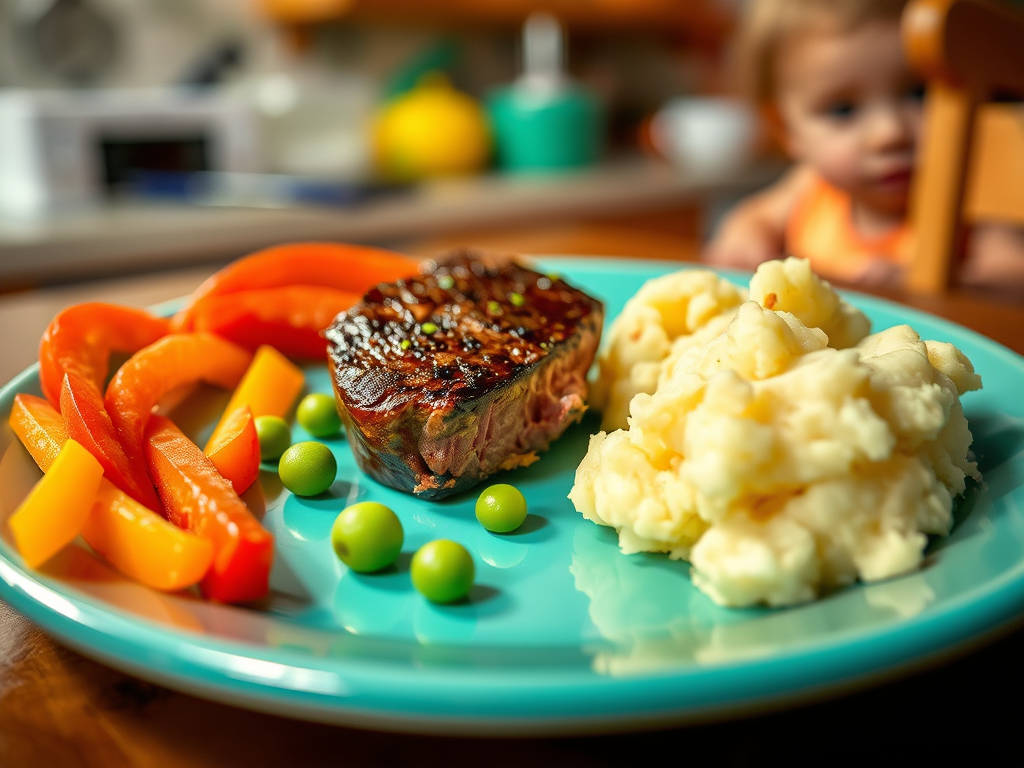
One of the best moves we ever made in parenting was when we desperately sought the advice of my mother-in-law as to how to get our children eating a wider variety of foods. They had been wildly adventurous with their eating… for about 5 seconds. Then it was all beige food, all the time.
But MIL shared a strategy that helped them to try new foods in a fairly unthreatening way, incentivised by the food they already loved.
Each meal, we’d dish them up a near-microscopic portion of every food offered at that meal: one pea, one morsel of bread and butter, about ¼ teaspoon of mashed potatoes, the teensiest, tiniest bite of steak… or whatever happened to be on the menu. Our children were allowed not to eat anything – that was their choice – but if they wanted more of anything, they had to eat all the samples first.
These samples were so small, that even though they put up a fuss the first time or two, they quickly learned that trying the undesirable food was not painful. Sometimes it was even pleasant!
As the kids grew, the portions grew as well, but never to the point of being overwhelming. We always made sure of that.
What the Bible says:
“For everything God created is good, and nothing is to be rejected if it is received with thanksgiving” 1 Timothy 4:4 (specifically refers to food)
It may not be our favourite, but God created food and made it good for us.
“Taste and see that the Lord is good; blessed is the one who takes refuge in him.” Psalm 34:8
Just like tasting a tiny morsel of food, we sometimes need to take a “small taste” of God’s goodness before we realize how enjoyable it is.
“So whether you eat or drink or whatever you do, do it all for the glory of God.” 1 Corinthians 10:31
Does it glorify God to reject the nourishment prepared for us (either by God himself in the foods he created, or by those who prepared it)? We must use wisdom here: we can go too far the other way and succumb to pressure to overeat, or eat something we know isn’t good for us. But when that is not the case, we can shift the focus from whether or not we already know and enjoy the food to nourishing our bodies, expanding our palettes and connecting with those around us.
We don’t eat only for fun or favorites. Food gives us strength to do what God calls us to.
Phrases to use:
It’s OK if it’s not your favourite.
You might enjoy this food another time, or prepared a different way.
Food isn’t only for enjoyment; it’s for nourishment (growth, strength, mood, health, etc)
Once you’ve tried everything on offer, you can have more of whatever you like
Trying new foods is an adventure!
What neuroscience says:
Neophobia and the Developing Brain:
Most kids go through a stage of food neophobia (fear or resistance to new foods) – a protection mechanism. But trying tiny morsels lowers the threat level, signaling to the brain’s amygdala (fear center) that the food is safe, and allowing the prefrontal cortex (decision-making, reasoning) to stay engaged instead of going into full-on rejection mode.
Exposure and Neural Plasticity
Repeated low-pressure exposure – even just a nibble – helps their gustatory cortex (taste-processing area) build familiarity and creates new neural pathways linking the food with safety. Research shows kids often need 10–15 exposures before accepting a new food.
Dopamine and Reward Shaping
When we focus on trying new foods, rather than enjoying the food, children earn the dopamine reward from being open and adventurous, a far more flexible and resilient mindset.
Cognitive Reframing and Executive Function
Reinforcing the idea that “food doesn’t have to be our favourite to choose to eat it” taps into higher-level thinking in the prefrontal cortex. Kids learn to:
- Delay gratification (I don’t need to only eat what I love right now).
- Practice flexibility (I can tolerate “meh” foods).
- Develop self-regulation (I choose what to eat for fuel, not just pleasure).
This builds resilience not only with food but also with other life experiences they may not love but can still do (schoolwork, chores, teamwork).
Associative Learning and Social Context
When you are calm and talk about food as fuel / variety, their mirror neurons reinforce this, and the pleasant social interaction (family meals, encouragement, shared laughter) helps the hippocampus encode the experience as safe and normal.
 Disciple Together
kindly connect…